
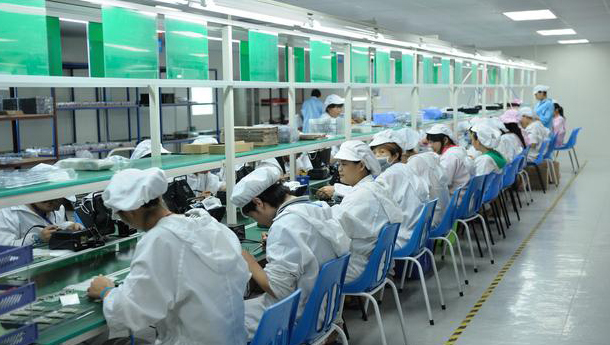
For many international buyers, sourcing from China starts with excitement—lower costs, massive manufacturing capacity, endless product options.
But long-term sourcing is a completely different game.
Finding a supplier for one order is relatively easy.
Finding a stable, reliable, long-term manufacturing partner in China is where most companies struggle.
Over the years, I’ve seen the same pattern repeat:
- Initial sample looks good
- First order goes smoothly
- Second or third order starts to degrade in quality or communication
- Eventually, the buyer has to switch suppliers again
This cycle is expensive and slows down business growth.
If you are serious about long term China sourcing, the goal is not just to “find a supplier.”
The goal is to build a repeatable, stable supply chain in China that does not break under scale.
Below are the three most important supplier selection principles I personally use when evaluating factories in China—especially for long-term cooperation.
1. MOQ Flexibility Is a Hidden Indicator of Supplier Stability
Most buyers misunderstand MOQ (Minimum Order Quantity).
They treat it as a negotiation number.
But in reality, MOQ is a signal of how flexible and mature a factory is.
Why MOQ matters for long-term sourcing
A rigid MOQ often indicates:
- low production flexibility
- weak engineering capability
- dependence on large batch production
- lack of willingness to support growing brands
On the other hand, a supplier with reasonable MOQ flexibility usually means:
- they can support product iteration
- they understand small-to-mid scale brands
- they are used to working with international buyers
- they are willing to grow with your business
What I look for in practice
For long-term China sourcing projects, I usually evaluate:
- Can MOQ be adjusted for pilot production?
- Are they open to gradual scaling (sample → small batch → mass production)?
- Do they support mixed SKU production?
If a supplier refuses any flexibility at the early stage, it is usually a sign they are optimized for large domestic orders—not long-term international cooperation.
2. Certification Completeness Reflects Export Readiness
Many buyers assume certifications are just paperwork.
In reality, certifications are a strong signal of whether a factory is truly prepared for international business.
Key certifications I check
Depending on the product category, this may include:
- ISO 9001 (quality management system)
- CE certification (EU compliance)
- FCC certification (US electronics compliance)
- RoHS compliance (restricted substances)
- Industry-specific certifications (if applicable)
Why this matters for long-term sourcing
A supplier without proper certifications often leads to:
- customs delays
- compliance risks in destination markets
- inability to scale into retail channels
- sudden production halts when regulations change
For long-term sourcing, you are not just buying products—you are building a supply chain that must survive international regulatory environments.
Important insight
A key mistake I often see is:
Buyers only check if certification exists, not whether it is actually valid and relevant to export markets.
A reliable sourcing partner should always verify:
- issuing authority
- validity period
- product scope coverage
- consistency with actual production line
3. Response Speed Is a Direct Indicator of Production Discipline
This is one of the most underrated factors in China sourcing.
Many buyers focus on price and ignore communication behavior.
But over time, communication speed becomes a predictor of production reliability.
What slow response usually means
- weak internal process management
- no dedicated export team
- poor coordination between sales and production
- low priority assigned to overseas clients
What fast, structured response indicates
- clear internal workflow
- export experience
- familiarity with international buyer expectations
- ability to handle production issues quickly
What I observe in long-term partners
Reliable factories in China typically:
- respond within 24 hours
- provide structured answers (not vague replies)
- proactively report production status
- escalate issues instead of hiding them
In long-term sourcing, communication discipline is often more important than initial pricing.
Because pricing can be negotiated.
But operational reliability cannot.
Shenzhen Advantage: Why Location Still Matters
If your sourcing involves hardware, electronics, or rapid prototyping, location matters more than most buyers realize.
Many of the most efficient suppliers are concentrated in Shenzhen’s hardware ecosystem, where:
- component suppliers
- PCB manufacturers
- CNC machining factories
- injection molding workshops
- assembly lines
- logistics providers
are located within close geographic proximity.
This ecosystem enables:
- faster prototyping cycles
- easier engineering iteration
- lower coordination friction
- shorter production lead times
For long-term China sourcing, this ecosystem effect is often the difference between “average supply chain” and “high-speed product development loop.”
Long-Term Sourcing Is Not Supplier Selection—It Is System Design
Most buyers think sourcing is about choosing the right factory.
In reality, long-term sourcing is about building a repeatable system that includes:
- supplier vetting
- sample validation
- production monitoring
- quality control
- logistics coordination
When this system is missing, even good suppliers will eventually fail under scale.
Final Thoughts
If you are currently struggling with:
- inconsistent product quality
- unreliable supplier communication
- difficulty scaling production
- uncertainty in China sourcing decisions
The issue is usually not China itself.
The issue is the absence of a structured long-term sourcing system.
Work With a China Sourcing Partner
If you are planning to build a long-term supply chain in China, or need help evaluating suppliers, prototyping products, or scaling production reliably, we can support you through a structured sourcing process based in Shenzhen.
We work with international buyers to:
- identify and verify suppliers in China
- support product development and prototyping
- manage production and quality control
- coordinate shipping and export processes
For inquiries, you can contact us directly via email with your product details and sourcing requirements.